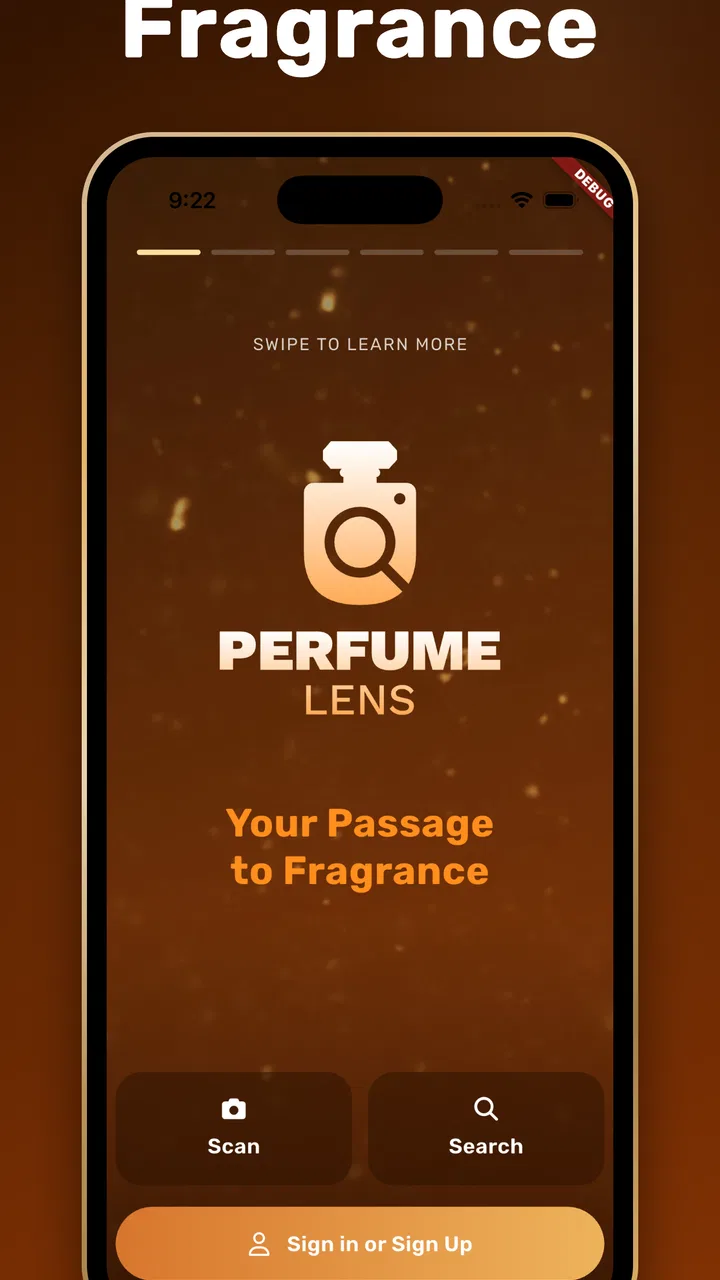
Perfume Lens
- 4.1
- Rating
- 10.00K
- Installs
- Free
- Price

 Analysis by App-foxy
Perfume Lens is the kind of lifestyle app I would open while standing in front of a perfume shelf, browsing a new fragrance online, or trying to remember which bottle worked well on my skin. Its basic idea is simple: use your phone to capture scents, keep them together, and gradually build a personal Scent Match Profile. That sounds more useful than another generic fragrance catalog because it puts the focus on my own discoveries rather than only on product descriptions.
After spending time with it, I see the app as a lightweight companion for people who enjoy exploring perfume but do not want to maintain notes in a separate document. It is free, aimed at everyone, and comes from Perfume Lens. The current release is version 1.0.6, and the app is available for devices running Android 7.0 or later. Its early reception is encouraging, with a 4.1 average from around 32 ratings and more than 10K installs, although that is still a small user base compared with established fragrance services.
How Perfume Lens fits into everyday fragrance discovery
The most appealing part of Perfume Lens is the combination of visual capture and personal organization. Instead of treating perfume as a list of names I have to type manually, the app is built around snapping and collecting. That makes sense in real situations: a tester bottle in a shop, a sample received with an order, or a fragrance a friend recommends can all become part of the same personal record.
You May Also Like

 AccuWeather: Weather Radar
AccuWeather Review: A Quick, Clear Forecast for Everyday Decisions
For everyday plans, the best forecast is the one you can understand quickly. AccuWeather makes rain timing, radar, and local conditions easy to act on, with a few trade-offs.

 Hill Climb Racing
Why Hill Climb Racing Still Turns Crashes Into One More Run
A tiny car, a bumpy hill and one more upgrade: Hill Climb Racing keeps resurfacing because its simple chaos makes every near-miss feel personal.

 AliExpress - Shopping App
AliExpress Makes Global Shopping Feel Personal, but Shoppers Bear the Risk
AliExpress turns a global marketplace into a pocket-sized discovery engine. Its reach is useful, its shopping loop compelling, and its trade-offs easy to miss.

 Lords Mobile: Kingdom Wars
Lords Mobile Is a Kingdom-Building Routine, Not a Quick Match
A case-by-case verdict on the building, battles, device demands, and social commitments that make Lords Mobile rewarding for some players and exhausting for others.

 PDF Scanner app - TapScanner
TapScanner Makes Paperwork Easier to Capture, Check, and Share
TapScanner makes scanning with a phone feel less like a rescue operation and more like a dependable step in getting work done. Its capture tools are useful, though not flawless.

 Block Blast!
 Shows How Much a Puzzle Game Can Leave Out
A quiet grid game shows why puzzle players increasingly value instant clarity, repeatable skill and low-pressure play—and where the genre still needs to catch up.
More From Our News Desk
View All News


I would not describe it as a replacement for a full perfume database. Traditional fragrance websites are better when I want long descriptions, note pyramids, community discussions, prices, or extensive comparisons. Perfume Lens takes a narrower route. It is more like a personal discovery layer, designed to help me build a picture of what I tend to like over time.
That distinction matters. If I already know the exact fragrance I want and only need a purchase link, a retailer or established fragrance catalog will probably be faster. If I keep encountering bottles whose names I forget, however, the camera-first approach has a practical advantage. It reduces the small amount of friction that usually causes personal fragrance tracking to fail.
The first-use experience and the value of a personal profile
The Scent Match Profile is the feature that gives the app a reason to remain installed. A one-time scan would be interesting, but not especially useful. The profile suggests that the app becomes more meaningful as I collect more scents and give it more information about my preferences. In other words, its value is cumulative rather than immediate.
I would approach that profile as a guide, not as an authority. Fragrance is highly personal: skin chemistry, weather, application amount, and even mood can change my reaction. A profile can help reveal patterns, but it cannot decide what I will enjoy in every situation. The best use is to let it narrow a large field of choices while keeping my own judgment in charge.
One useful habit is to capture a scent at the moment I encounter it, then add a brief personal reminder while the experience is still fresh. I might note “pleasant but too sweet for daytime” or “great opening, weak after lunch.” Those comments are more valuable to me than copying a polished description because they reflect how the fragrance actually fits my routine.
A realistic shopping scenario
Imagine I am visiting a department store before a weekend trip. I test several fragrances, but after an hour the names and impressions begin to blur together. With Perfume Lens, I can photograph the bottles I want to remember and collect them instead of relying on memory or taking scattered screenshots. Later, I can review the group at home and compare it with the direction of my Scent Match Profile.
The same workflow works for a less glamorous but common situation: receiving several samples in an online order. I can capture each one before putting the vials in a drawer, then use the collection as a reminder of what deserves another wear. That prevents the familiar problem of owning samples I cannot identify a week later.
A further advantage is decision pacing. I do not have to buy immediately just because a tester impressed me in a store. Capturing it first lets me leave with a shortlist, wear or revisit the candidates later, and make a calmer choice. For anyone trying to avoid impulse purchases, that small pause may be more useful than a long list of fragrance facts.
What the current release does well and where it still feels early
I find the current release most convincing when I use it as a deliberate record of scents I have actually tried, rather than a shortcut to an instant verdict. Its focused capture-and-collection idea gives fragrance discoveries somewhere to go, while the still-early feel is a reason to keep expectations practical. In a shared home, that leads to a more important question: whose preferences is the collection meant to represent?
The product’s present direction
Version 1.0.6 gives the app a clearly defined starting point rather than the feeling of a mature, all-purpose fragrance platform. The core direction is easy to understand: capture scents, keep them organized, and use the growing collection to shape a personal match profile. I appreciate that focus because it avoids burying the main idea under unrelated lifestyle tools.
The release date, March 17, 2026, also places the app in an early stage of its product life. That helps explain why I would judge it primarily on whether the central workflow is useful and pleasant, not on whether it already matches the depth of services that have been building fragrance communities for years. The current version should be viewed as a foundation, with future refinement likely to matter more than a long list of secondary features.
For an existing user, the practical question is whether updating to the current release changes the everyday experience. The confirmed version tells me which build is current, but I would not assume that every update represents a dramatic redesign. In an app this focused, improvements may be felt through smoother capture, clearer organization, or better handling of the profile rather than through a completely new concept.
Three ways to get more from the app
First, I would avoid scanning everything indiscriminately. A collection filled with bottles I have never smelled can become less useful than a smaller set of fragrances I genuinely tested. Capturing only scents that made me curious creates a cleaner signal for the profile and makes later browsing more manageable. This is a simple trade-off: less coverage, but more personal relevance.
Second, I would separate curiosity from commitment. A scent can be worth collecting even if I would never wear it regularly. Keeping those two ideas distinct prevents the profile from becoming a shopping wishlist by accident. A fragrance may be interesting for its unusual character, yet still be wrong for work, hot weather, or close contact with other people.
Third, I would review the collection after wearing a fragrance more than once. First impressions are often dominated by the opening minutes. A later check can reveal whether I still enjoy the dry-down, whether the projection suits my surroundings, and whether I reach for it naturally. This makes the app more useful as a record of lived experience rather than a gallery of attractive bottles.
Where the approach may create friction
The camera-led workflow is convenient, but it depends on a good capture. Poor lighting, reflective packaging, unusual bottle shapes, or a label hidden by a tester cap can make the process less effortless than the concept suggests. In a busy shop, I may also prefer to type a name quickly rather than stop to frame a photograph carefully.
There is another limitation in relying on a visual record: a bottle is not the scent itself. Different versions, concentrations, flankers, and similarly styled packaging can be easy to confuse. I would double-check the name after capturing an item, especially when a brand has several bottles with nearly identical designs. A careful collection is more valuable than a large but uncertain one.
The profile also needs time to become useful. Someone looking for instant, highly specific recommendations may find the early experience underwhelming if they have not yet collected enough personal examples. That is not necessarily a flaw in the concept, but it does mean the app rewards patient use. I would not install it for one recommendation and uninstall it the same day.
How it compares with familiar alternatives
Compared with a notes app, Perfume Lens offers a more purpose-built way to gather fragrance discoveries. A notes app gives me complete freedom, but I have to invent the structure, remember naming conventions, and keep the records consistent. Perfume Lens is more convenient when I want the collection and profile to guide the process instead of designing my own spreadsheet.
Compared with a general perfume database, it appears more personal and less encyclopedic. A database is the better choice when I want community opinions, detailed note information, or broad research before buying. Perfume Lens makes more sense when the question is “What have I encountered, and how does it fit my taste?” rather than “What does the fragrance community say about this bottle?”
Compared with a retailer app, its strength is not immediate purchasing. Retailers are built around stock, checkout, and promotions. This app is better suited to slowing down the decision and keeping a personal trail of discoveries. If my main goal is to buy a known fragrance quickly, I would choose the retailer. If my goal is to understand my own preferences, I would give Perfume Lens more time.
Who should use it and who should skip it
I think it is a good fit for beginners who feel overwhelmed by the number of fragrances available. Instead of trying to understand the entire market, they can start with bottles they have actually smelled and let their collection develop naturally. It is also useful for hobbyists who visit perfume shops often, sample niche releases, or regularly forget which candidates they wanted to revisit.
It could suit gift shoppers as well, especially someone trying to remember the kinds of scents a partner or family member enjoys. I would still treat the profile as a clue rather than a guarantee, but a personal collection can provide better context than guessing from a single favorite bottle.
I would skip it if I rarely explore fragrance, already have a reliable cataloging system, or only want professional product research. Someone who expects exact scent analysis from a photograph may also be disappointed. The app’s appeal is in organizing discovery and preference, not in replacing the physical act of smelling a fragrance.
Questions I would consider before installing
Is it free to try? Yes, the app is listed as free, which makes experimentation easier. I can test the capture-and-collection workflow without first committing money to another subscription. That is particularly helpful because the profile’s usefulness depends on whether I enjoy returning to the app over time.
Will it work on an older phone? The minimum requirement is Android 7.0, so it is not restricted to only recent Android devices. I would still expect the quality of the camera and the general speed of the phone to affect how comfortable the scanning workflow feels, especially in shops or low-light settings.
Does it replace sampling? No. A photograph can help me remember and organize a scent, but it cannot reproduce how that perfume develops on my skin. I would use the app before and after sampling, not as a substitute for testing the fragrance in real conditions.
Is it suitable for a shared household collection? It can be useful if everyone treats the collection as a shared reference, but personal preferences may become mixed together. For the clearest Scent Match Profile, I would keep my own taste consistent rather than capturing every bottle used by someone else.
Should existing users expect a completely different app in version 1.0.6? I would not approach the update with that expectation. The current release supports the same focused identity: capturing, collecting, and exploring scents through a personal profile. Its importance is that it establishes the present product baseline; future changes will be worth watching for improvements to recognition, organization, and the usefulness of accumulated preferences.
What I would watch as the app develops
The most important future question is whether the profile becomes more helpful without becoming too rigid. Good recommendations should leave room for surprises. If the app only repeats the same scent family I already collect, it may become predictable. If it can explain why an unfamiliar fragrance might suit me while still acknowledging the difference between similarity and personal enjoyment, it could become much more valuable.
I would also watch the balance between speed and accuracy. The best version of this concept would let me capture a bottle quickly in a real shop, while giving me enough control to correct a mistaken identification or distinguish between related products. Convenience matters, but a wrong entry can quietly distort the profile.
Collection management will matter too. As the number of saved scents grows, I will need a way to find the bottles that are worth revisiting, separate samples from owned fragrances, and remember which ones worked in particular settings. These are not reasons to dismiss the current app; they are the areas that will determine whether it remains useful after the novelty of the first few captures fades.
My overall view is positive but measured. Perfume Lens has a clear purpose, a friendly price of free, and a practical idea for turning scattered fragrance encounters into a personal record. Its early scale, with over 10K installs and around 32 ratings, suggests that it is still finding its audience rather than standing as a fully established authority. That makes it easier to recommend as an experiment than as the only fragrance tool anyone needs.
I would recommend it to anyone who wants to remember, organize, and reflect on the perfumes they actually encounter. Give it a focused collection, use it alongside real skin testing, and let the profile develop instead of demanding instant certainty. If that sounds like the kind of lightweight habit you would enjoy, this lifestyle app is worth trying. If you want exhaustive perfume research or direct shopping first, a conventional fragrance database or retailer will probably serve you better.
FAQs for Perfume Lens
01What is Perfume Lens and what can I use it for?
Perfume Lens is designed to help users explore and identify fragrances through their mobile device. Depending on the available features, it may provide information about perfume notes, brands, fragrance families, or similar products. It can be useful when comparing scents, discovering new perfumes, or researching a bottle before buying. Results may vary, especially when images are unclear or a fragrance is not included in its database.
02How does Perfume Lens identify a perfume?
The app generally relies on the camera or uploaded images to recognize a perfume bottle, label, or packaging. For the best results, take a sharp, well-lit photo with the product name and brand clearly visible, avoiding reflections and obstructions. Recognition is not guaranteed for every bottle, particularly limited editions, unusual packaging, or products with small or damaged labels.
03Does Perfume Lens require an internet connection?
An internet connection may be necessary for image recognition, searching fragrance information, loading product details, or accessing updated databases. Some previously viewed content might remain available temporarily, but users should not assume that the app works fully offline. Availability and performance can also depend on connection quality, regional services, and whether the application’s servers are operating normally.
04Is Perfume Lens free to download and use?
Perfume Lens may be available as a free download, but certain functions can include advertisements, optional purchases, subscriptions, or usage limits. Before starting a trial or confirming payment, check the app store listing for the current pricing, billing period, and cancellation terms. Features and costs can change between Android and iOS versions or across different countries.
05What privacy permissions does Perfume Lens request?
If you use its scanning or image-upload features, Perfume Lens may request access to the camera and photo library. These permissions should be granted only if they are needed for the feature you want to use. Review the app’s privacy policy to understand how images, searches, device information, and account data are handled. You can usually manage or revoke permissions through your phone’s settings.
Pros
- Quickly identifies fragrance notes from a perfume bottle photo.
- Useful for discovering similar scents and new fragrance options.
- Simple interface makes browsing perfume information easy.
- Can help organize and compare perfumes before making a purchase.
- Convenient reference tool for both casual users and fragrance fans.
Cons
- Recognition may be inaccurate with unusual or poorly lit bottle images.
- Fragrance details can vary by region
- reformulation
- or product edition.
- Some features or results may require an internet connection.
- The database may not include niche or recently released perfumes.
- Recommendations cannot fully replace testing a fragrance on your skin.

Perfume Lens
Gallery